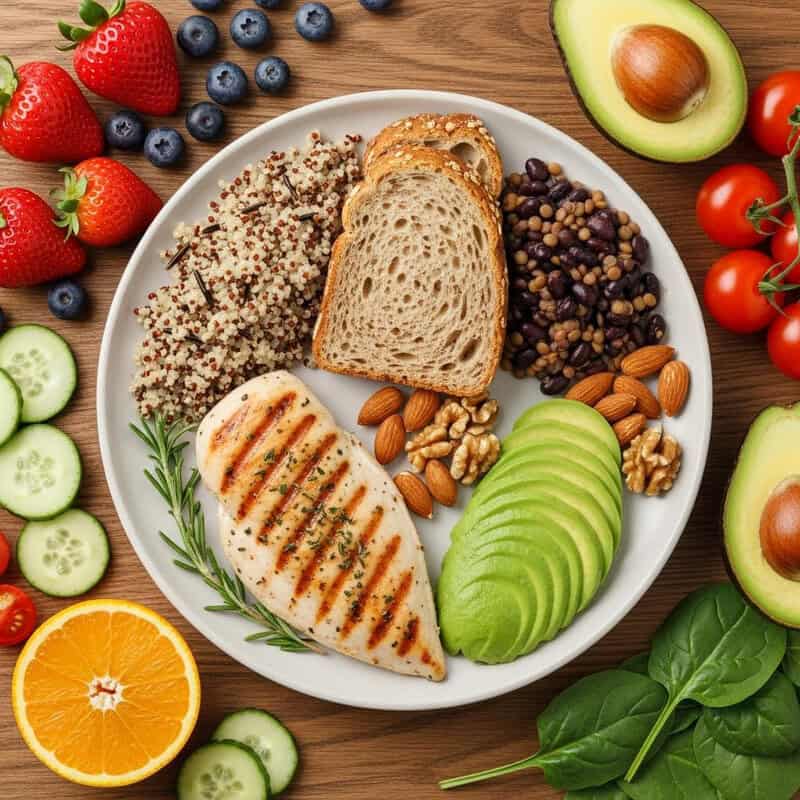
Achieving optimal health and energy starts with what’s on your plate. A balanced diet isn’t about deprivation or fleeting trends—it’s about nourishing your body in a way that can last a lifetime. This guide will break down the essential components of a well-rounded eating plan and offer actionable strategies for making smart food choices every day. Whether your goal is weight management, improved focus, or long-term wellness, you’ll find practical steps here to develop habits that stick.
NEXT >>
The Basics of a Balanced Diet
A balanced diet features diverse, nutrient-rich foods supplying essential macronutrients and vital micronutrients. | Generated by Google Gemini
A truly balanced diet provides the right proportions of macronutrients—carbohydrates, proteins, and fats—alongside essential micronutrients like vitamins and minerals. Each macronutrient fuels vital bodily functions: carbohydrates supply energy, proteins repair tissues, and fats support cell health.
Micronutrients, found in fruits, vegetables, and whole grains, play critical roles in immunity, bone strength, and more. Prioritizing a variety of nutrient-dense foods ensures your body gets what it needs for energy, growth, and disease prevention. Learn more about these building blocks from the NHS Eat Well Guide.
<< Previous
NEXT >>
Assess Your Current Eating Habits
A neatly organized food journal open beside a healthy meal, ready for tracking daily eating habits and progress. | Generated by Google Gemini
Before making any changes, it’s crucial to understand your current eating patterns. Start by keeping a food diary for a week, noting everything you eat and drink. This helps reveal trends—like frequent snacking, missed meals, or reliance on processed foods—and highlights both strengths and areas needing improvement.
Honest self-assessment sets a realistic starting point for building healthier habits. There are many free tools and apps, such as MyFitnessPal, that can make tracking easier and more insightful. By analyzing your habits, you lay the groundwork for meaningful, sustainable changes.
<< Previous
NEXT >>
Set Realistic Nutrition Goals
A handwritten diet plan sits beside fresh vegetables and a water bottle, symbolizing commitment to nutrition and goal setting. | Generated by Google Gemini
Setting specific, attainable nutrition goals is key to lasting success. Instead of vague intentions like “eat healthier,” define clear targets—such as adding one serving of vegetables to dinner or swapping sugary drinks for water. Tailor your goals to fit your unique lifestyle, preferences, and any health considerations.
This personalized approach boosts motivation and helps track your progress. Remember, gradual changes are more sustainable than drastic overhauls. For guidance on setting effective dietary goals, check out the CDC’s Healthy Eating Tips for practical strategies and inspiration.
<< Previous
NEXT >>
Plan Balanced Meals and Snacks
Colorful, balanced meal prep featuring vegetables, fruits, lean proteins, whole grains, and healthy fats. | Generated by Google Gemini
Crafting balanced meals involves including a variety of food groups—vegetables, fruits, lean proteins, whole grains, and healthy fats—at every meal and snack. This approach ensures you receive a broad spectrum of essential nutrients while keeping your diet interesting and enjoyable. Planning ahead can help you avoid last-minute unhealthy choices and reduce food waste.
Consider using meal prep tools or templates, and rotate recipes to prevent monotony. For more inspiration on building nutritious, well-rounded meals, visit the ChooseMyPlate resource by the USDA.
<< Previous
NEXT >>
Make Smart Food Choices
A shopper carefully reads nutrition labels in a grocery aisle, selecting fresh produce and healthy options for their cart. | Generated by Google Gemini
Opting for whole, nutrient-dense foods—such as fresh fruits, vegetables, whole grains, lean proteins, and healthy fats—helps you get more vitamins and minerals with fewer empty calories. Minimize highly processed foods high in added sugars, sodium, and unhealthy fats.
Learning to read nutrition labels empowers you to make informed decisions; check serving sizes, ingredient lists, and look for products with minimal additives. Making these swaps consistently supports better energy and long-term wellness. For practical tips on deciphering food labels, visit the FDA’s Nutrition Facts Label Guide.
<< Previous
NEXT >>
Practice Portion Control
Mindful portion control supports healthy weight management and prevents overeating, even with nutritious foods. | Generated by Google Gemini
Understanding and managing portion sizes is essential for maintaining a healthy weight and preventing overeating. Even nutritious foods can contribute to excess calorie intake if portions are too large. Simple strategies include using smaller plates, reading serving size information on packaging, and listening to your body’s hunger cues.
Avoid eating straight from large containers, and try pre-portioning snacks in advance. These habits can help you stay mindful and in control of your food intake. For more portion control tips and visual guides, visit the Academy of Nutrition and Dietetics.
<< Previous
NEXT >>
Stay Hydrated
A crystal-clear glass of water sits on the table, inviting you to enjoy a refreshing, healthy drink. | Generated by Google Gemini
Proper hydration is a fundamental part of a balanced diet, supporting digestion, energy, and overall health. Aim for about 8 cups (2 liters) of water daily, though individual needs may vary based on activity level and climate.
Carrying a reusable water bottle, setting reminders, and infusing water with fruits or herbs can make hydration effortless and enjoyable. Avoid sugary beverages, which can add unnecessary calories and disrupt your nutrition goals. For detailed guidelines on daily water intake and hydration tips, visit the CDC’s Water & Healthier Drinks page.
<< Previous
NEXT >>
Monitor Progress and Adjust
A colorful progress chart tracks daily meals and highlights healthy choices, inspiring commitment to a balanced lifestyle. | Generated by Google Gemini
Regularly reviewing your dietary habits helps you stay accountable and recognize what’s working or needs improvement. Track your meals, energy levels, and overall well-being to spot positive changes and areas to refine. Be patient—lasting change comes from consistent, gradual adjustments rather than overnight overhauls.
If challenges arise, revisit your goals and adapt your approach as needed. Small tweaks, like adding more veggies or adjusting portion sizes, can have a big impact over time. For tools and support on monitoring nutrition, explore the USDA’s Dietary Tracking Resources.
<< Previous
NEXT >>
Conclusion
Crafting a balanced diet through mindful choices, diverse meals, and consistent, healthy habits. | Generated by Google Gemini
Building a balanced diet is a journey rooted in understanding your nutritional needs, making thoughtful choices, and staying mindful of your habits. By assessing your current diet, setting realistic goals, planning diverse meals, choosing whole foods, practicing portion control, hydrating well, and monitoring progress, you create a sustainable path to better health.
Remember, small, consistent changes lead to lasting results. Take the first step today and empower yourself with knowledge and action. For continued guidance and practical tips, visit the Australian Government’s Eat for Health resource.
<< Previous