The coronavirus from Wuhan has already claimed the lives of more than three thousand people, brought down stock exchanges and delayed the supply of goods. Mortality from pneumonia caused by Covid-19 exceeded the statistics on mortality from influenza. Against this background, in Europe, sales of the novel by Albert Camus “The Plague” soared. Social networks and media post memes comparing coronavirus with Black Death, the second plague pandemic in history. How justified is this analogy? This is discussed by the medieval historian Ken Mondschein.
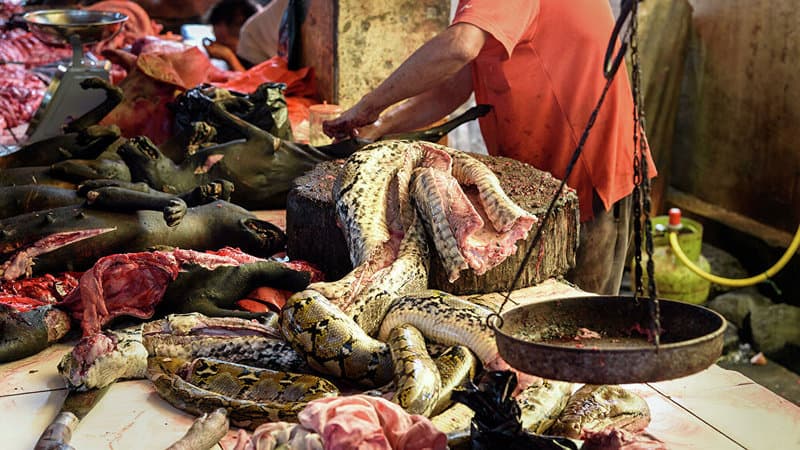
There really are similarities. As then, the disease came from the East, people became infected from animals – in the Middle Ages from rats, nowadays – apparently, from bats. As in the days of the Black Mora, globalization contributed to the spread of the disease. The plague was carried by Mongolian troops and Italian merchants along the Great Silk Road. Coronavirus infects travelers. The virus led to an outbreak of xenophobia – strangers were accused of adversity. In medieval Europe, during the time of the plague, Jewish pogroms took place.
At the same time, coronavirus is not at all like plague, and not only because it is a virus, not a bacterium. Covid-19 is transmitted from person to person – this only happens with one of the three forms of plague, the pulmonary. And, most importantly, coronavirus is curable: mortality from the pneumonia caused by it is about 3.4%; mostly elderly people with weak immunity and side diseases die. Mortality from various forms of plague ranges from 50 (bubonic form) to 100% (pulmonary form, in advanced cases).
Mondshein also compares the economic consequences of pandemics. For the peasants who survived the Black Death, the conditions improved: a lot of land was liberated, which means there was more food. Skilled workers in England, who received a retirement per day, began to earn four pence. Coronavirus will affect the modern economy exactly the opposite, the historian predicts. To maintain shareholder value, corporations will lower wages. Employees who have been transferred to remote work run the risk of losing their jobs altogether.
The end result will be a fall in wages, economic uncertainty and a widening gap between rich and poor, the scientist believes. However, coronavirus slowed down the Chinese economy, due to which harmful emissions into the atmosphere sharply decreased.
Featured image on unsplash.com
DON’T MISS The Planet Is Threatened By Coronavirus. Learn How To Reduce The Risks Of Infection